Québec winters do not forgive improvised preparation. For a rental property owner, every fall is a short but decisive window. Well-planned winter preventive maintenance on a rental property can avoid emergency expenses two to three times higher than the corresponding preventive work, while helping the owner meet their legal obligations to tenants.
This article presents a structured approach to preparing a rental property for the cold season: priority checks, the landlord’s legal obligations and what to do in a winter emergency.
Winter preventive maintenance for a rental property: why it’s mandatory
Winter preventive maintenance on a rental property is not just a matter of economic common sense. It is also a legal obligation. The Civil Code of Québec requires the landlord to keep the unit in good habitable condition for the entire term of the lease, winter included.
An unresolved heating failure exposes the landlord to an application for a rent reduction or a claim for damages before the Tribunal administratif du logement (TAL), Québec’s rental housing tribunal. Water damage from a frozen pipe can turn a minor repair into a major loss. According to industry data, an ignored leak can turn a $1,500 roof repair into a $50,000 structural loss if the framing is affected.
Preventive maintenance also reduces tenant complaints, lowers turnover and protects the building’s long-term profitability. A unit that is comfortable in winter keeps good tenants and avoids the marketing costs associated with a vacancy.
Pre-winter checklist
Here are the checks to carry out every fall, ideally in September or October, before the first deep cold.
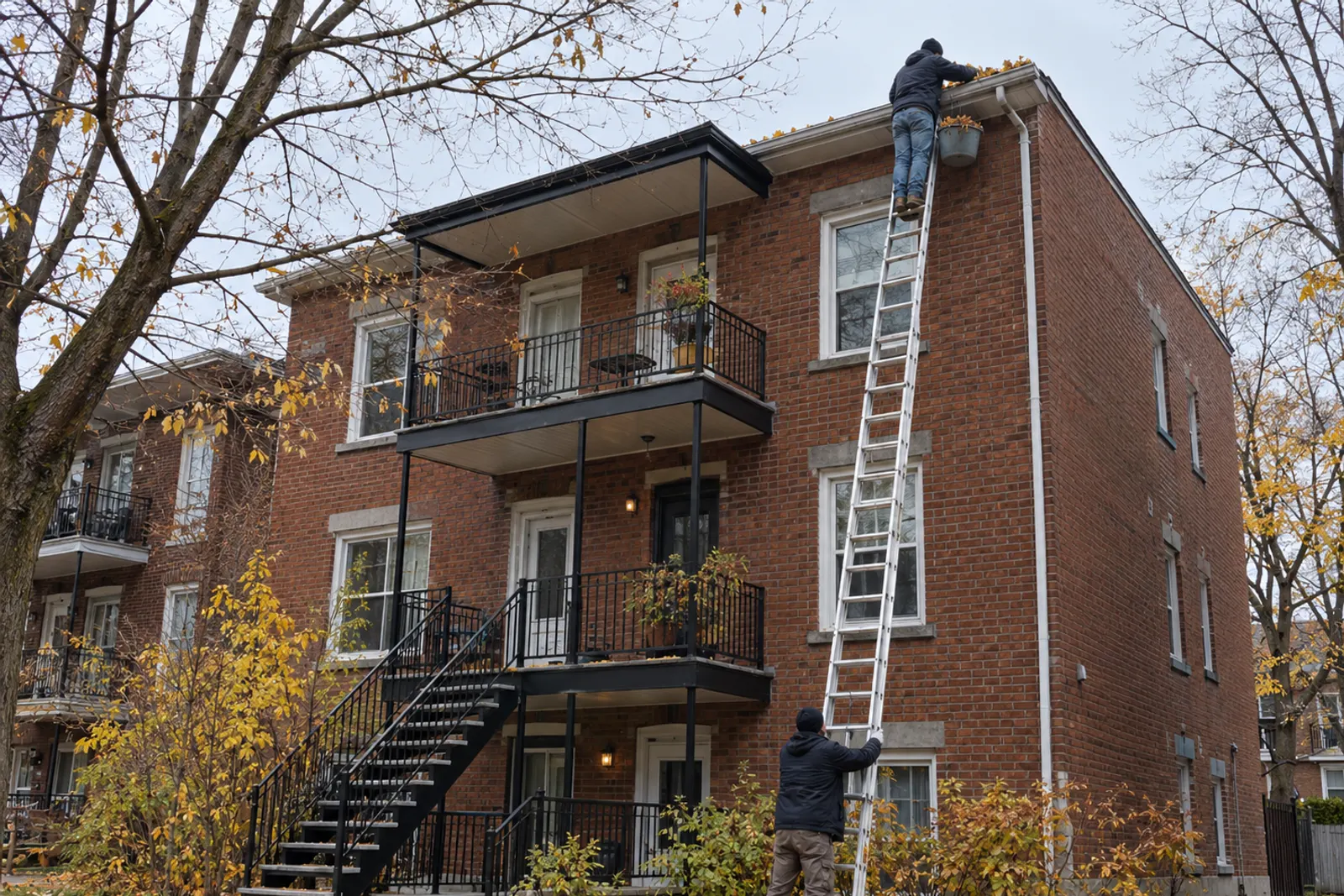
Roof and gutters
The roof is the first line of defence against winter leaks. An annual inspection makes it possible to detect weakened membranes, loose flashing and at-risk areas before snow and frost turn them into costly problems.
Gutters must be cleaned in the fall to prevent blockages that lead to ice build-up and leaks into the walls. Under the municipal requirements in force since April 2026 in Québec (in French), every local municipality must maintain a by-law on the occupancy and maintenance of buildings, which strengthens owners’ obligations regarding roofing and watertightness.
Heating system
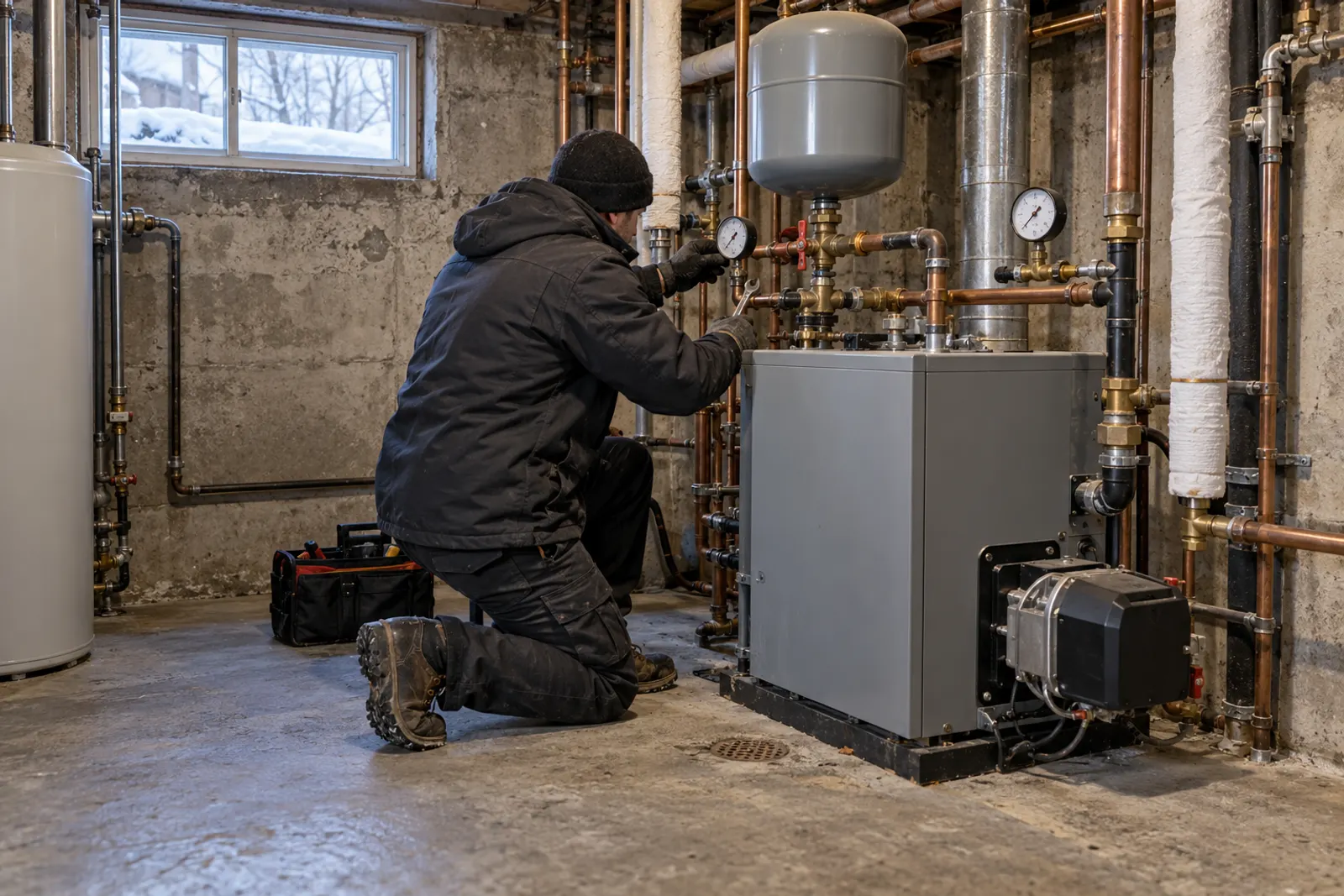
Annual maintenance of the heating system is mandatory. Boiler, forced-air furnace, heat pump, electric baseboards: each type of system has its own maintenance requirements. Cleaning the burner, replacing filters and checking the distribution circuits must be done before the cold season begins.
A heating system that fails in the middle of winter leads to emergency service charges billed at two to three times the standard rate. Scheduling this maintenance in the fall, when technicians are available, costs considerably less.
Pipe insulation and exposed lines
Water pipes located in unheated spaces (uninsulated basement, crawl space, space within exterior walls) are vulnerable to freezing. Installing or checking pipe insulation on these lines is a simple preventive measure that avoids burst pipes, one of the most frequent and costly winter emergencies.
Air exchanger and ventilation
The air exchanger must be cleaned twice a year, in line with preventive maintenance standards. A clogged exchanger reduces indoor air quality and can encourage excessive condensation, a source of mould. In winter, inadequate ventilation worsens humidity problems in the units and can engage the landlord’s liability.
Checks to group into your fall routine:
- Visual inspection of the roof and gutters (or hire a professional)
- Annual cleaning and maintenance of the heating system
- Checking and replacing insulation on exposed pipes
- Cleaning the air exchanger and replacing ventilation filters
- Caulking windows, doors and exterior joints
- Checking smoke and carbon monoxide detectors
- Signing the snow removal contract before the first snowfall
Entrust your building’s preventive maintenance to a specialized team
Insulation and caulking to reduce complaints and costs
A poorly insulated unit in winter creates two kinds of problems: tenant complaints about cold or drafts, and high heating costs if heating is included in the rent.
Priority areas to caulk
Caulking windows, exterior doors and pipe penetrations through walls is one of the most cost-effective preventive measures. A caulking joint that came loose over the summer may seem harmless, but it becomes a source of cold and humidity as soon as temperatures drop.
Exterior walls, unfinished basements and poorly insulated attics are the main sources of heat loss in Québec rental buildings, especially in plexes built from the 1960s to the 1990s.
The link between insulation and profitability
A well-insulated unit costs less to heat, which reduces operating expenses if heating is the landlord’s responsibility. It also attracts more stable tenants: a unit that is comfortable in winter reduces turnover, and every change of tenant brings marketing, cleaning and refurbishing costs.
In older buildings, inadequate insulation can also cause condensation and mould problems, which engages the landlord’s liability under the Civil Code of Québec. To learn more about the obligations specific to older buildings, see the guide to maintaining older buildings in Québec.
What to do in case of water damage or a heating failure in winter
Even with rigorous preparation, winter emergencies happen. How quickly the landlord responds in the first few hours often makes the difference between a minor repair and a major loss.
Heating failure: obligations and time frames
The Barreau du Québec (in French) points out that the landlord is required to provide adequate heating in the unit. The law does not set a precise minimum temperature, but the TAL generally considers that sufficient heating must allow people to live in the unit in reasonably comfortable conditions.
In the event of a failure, the landlord must act immediately. If the repair cannot be made the same day, the landlord must provide supplementary heating or temporary accommodation for the tenant. Failing to act exposes the landlord to an application for a rent reduction or a claim for damages before the TAL.
Water damage: act within the hour
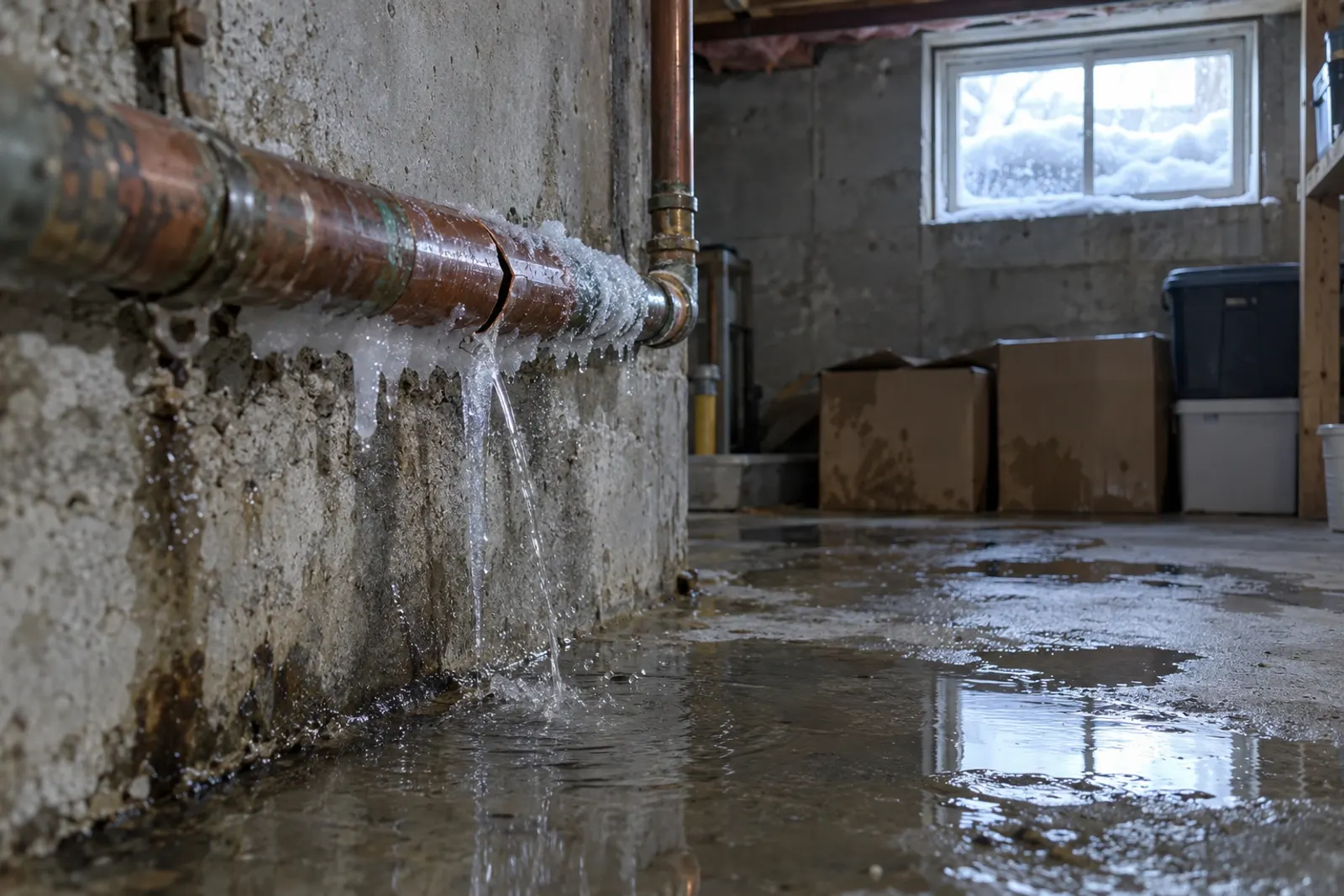
Active water damage in winter (a frozen pipe that bursts, a roof leak under accumulated snow) must be dealt with within the hour. Every hour of delay increases the affected area and the cost of repairs. Shut off the water if necessary, call a plumber or emergency technician and document the condition of the premises for the insurer.
Who is responsible for heating in a rental building?
Responsibility for heating depends on the terms of the lease. If heating is included in the rent, the landlord must ensure an adequate level of heat at all times. If the tenant pays for their own heating, they are responsible for the cost, but the landlord remains responsible for the proper working of the equipment installed in the unit.
See the emergency response service available 24/7
Winter preventive maintenance, an investment that protects your building
Carrying out winter preventive maintenance on a rental property is not optional: it is a legal obligation and a rational economic decision. A well-structured plan reduces costly emergencies, limits tenant complaints, protects the building’s structure and maintains the investment’s profitability. Owners who delegate this management to a specialized team make sure every seasonal check is done on time, without having to coordinate suppliers.
Entrust your building’s preventive maintenance to a specialized team
FAQ
Who is responsible for heating in a rental building in Québec?
The landlord is responsible for the proper working of a rental building’s heating equipment. If heating is included in the rent, the landlord must ensure an adequate level at all times. If the tenant pays for their own heating, they bear the cost, but the landlord remains responsible for the equipment. In the event of a failure, the obligation to act quickly always falls on the landlord.
What recourse does a tenant have if the heating is insufficient?
A tenant who receives insufficient heating can file an application with the Tribunal administratif du logement to obtain a rent reduction proportional to the harm suffered, or claim damages. The TAL has ordered landlords to pay significant amounts in cases of inadequate heating. A responsive landlord who documents their interventions is in a much better position to defend themselves.
When should you start preparing a rental property for winter?
The ideal time to carry out winter preventive maintenance on a rental property is between mid-September and the end of October. This timing lets you have the heating system checked before the busy fall season, clean the gutters after the leaves have fallen and sign snow removal contracts before the first snow.

Need a quote for your property management?
Get a personalized assessment with no commitment.
Request a quote