
Even today, some landlords manage their rents with a good old binder and personal cheques. Meanwhile, as they file their paper receipts, a neighbouring landlord signs a lease electronically in barely fifteen minutes, receives payments automatically and gets an alert on their phone when a water leak detector goes off in the basement of one of their units.
Property management technology in Québec has transformed the profession’s practices, and the shift has accelerated since 2023. This article reviews the tools every rental property owner should know in 2026, whether they manage a duplex or fifty doors. You will see which platforms Québec professionals use, what artificial intelligence really changes and how to choose tools suited to your situation.
Why property management technology is becoming essential
The market has changed. According to the CMHC’s 2025 Rental Market Report, the average rent for a two-bedroom unit in the Montréal area rose 7.2% between October 2024 and October 2025, reaching $1,346. At the same time, the vacancy rate rose to 2.9%. These two simultaneous trends require landlords to be more rigorous in tracking, marketing and tenant retention.
Digital tools respond directly to these challenges. They make it possible to react quickly, document every exchange and reduce the friction that drives good tenants away.
Regulatory pressure and traceability
The Tribunal administratif du logement (TAL), Québec’s rental housing tribunal, requires rigorous documentation in the event of a dispute. Property management technology provides exactly this kind of automatic traceability: emails, rent increase notices, inspection reports and payments archived effortlessly.
Day-to-day operational efficiency
Québec landlords now have complete ecosystems that automate rent collection, reminders, maintenance scheduling and financial reporting. These time savings free up hours that can be reinvested in growing the portfolio or simply in quality of life.
Property management software used in Québec

Several solutions coexist on the Québec market, some local and others Canada-wide or North American. The right choice depends on the size of your portfolio, your budget and your comfort level with technology.
Solutions developed in Québec
Hopem has served the Québec market since 1985 and focuses its expertise on income properties, condominiums and seniors’ residences. Building Stack, based in Montréal, offers a modern platform that manages Kijiji listings, leases, payments and communication with tenants.
The advantage of local solutions lies in their compliance with Québec’s tax and legal framework. Rent increase calculations, production of RL-31 slips and bilingual management are built in natively. This local adaptation often makes the difference between property management technology that truly serves the landlord and technology that creates more friction than it removes.
International solutions adopted in Québec
Buildium, Yardi Breeze and AppFolio dominate the North American segment. They offer very advanced features, but often require adjustments to respect Québec’s particularities, especially on the tax side.
Comparison of the main categories of tools
| Tool category | What it does | Usefulness for a Québec landlord |
|---|---|---|
| All-in-one software | Leases, payments, accounting, maintenance | Complete centralization, ideal beyond 5 doors |
| Payment platform | Automatic rent withdrawals | Reduces late payments and NSF cheques |
| Electronic signature | Remote signing of leases and amendments | Compliant with Québec contract law |
| Accounting software | Financial tracking and taxes | Simplifies production of RL-31 slips |
| Maintenance app | Tickets, contractor tracking | Complete traceability of work orders |
| Connected devices | Leak detection, smart locks | Loss prevention and tenant access |
A landlord does not need all of these tools from the start. The right entry point depends on the number of units and the time available.
Artificial intelligence in rental management
AI is no longer a gimmick. It is already transforming several aspects of property management in Québec.
Chatbots trained on a landlord’s documentation answer tenants’ frequently asked questions outside office hours. Predictive analytics models estimate the optimal rent for a vacant unit by cross-referencing neighbourhood data. Automated screening tools filter rental applicants according to objective criteria.
That said, AI has its limits. An automated decision to refuse a rental can raise discrimination issues if it relies on approximate variables. Human oversight remains essential, especially in a regulated framework like that of the TAL.
Concrete, mature uses today
- Automated generation of optimized listings for rental platforms
- Preliminary answers to applicants’ information requests
- Analysis of rent trends by area
- Detection of anomalies in monthly accounting
- Automatic summary of exchanges with a tenant in the event of a dispute
These uses are proven and accessible. More advanced uses, such as predicting payment defaults, should still be handled with caution.
Have the technology side of your building management assessed
Electronic payments and signatures in Québec
The post-dated cheque reigned for a long time. It is now giving way.
Pre-authorized debit is one of the most mature pillars of property management technology, and it remains the most widely used standard for rent collection. Several Québec and Canadian platforms, including Plooto, Letus and the modules built into Buildium, automate monthly withdrawals and send receipts to tenants. The risk of NSF cheques decreases, and tracking becomes automatic.
For leases, electronic signatures have been legally recognized in Québec since the adoption of the Act to establish a legal framework for information technology (in French). DocuSign, Notarius and several tools built into management software make it possible to sign a lease remotely with legal value equivalent to a handwritten signature. This considerably speeds up leasing and simplifies annual renewal.
Connected devices and preventive maintenance
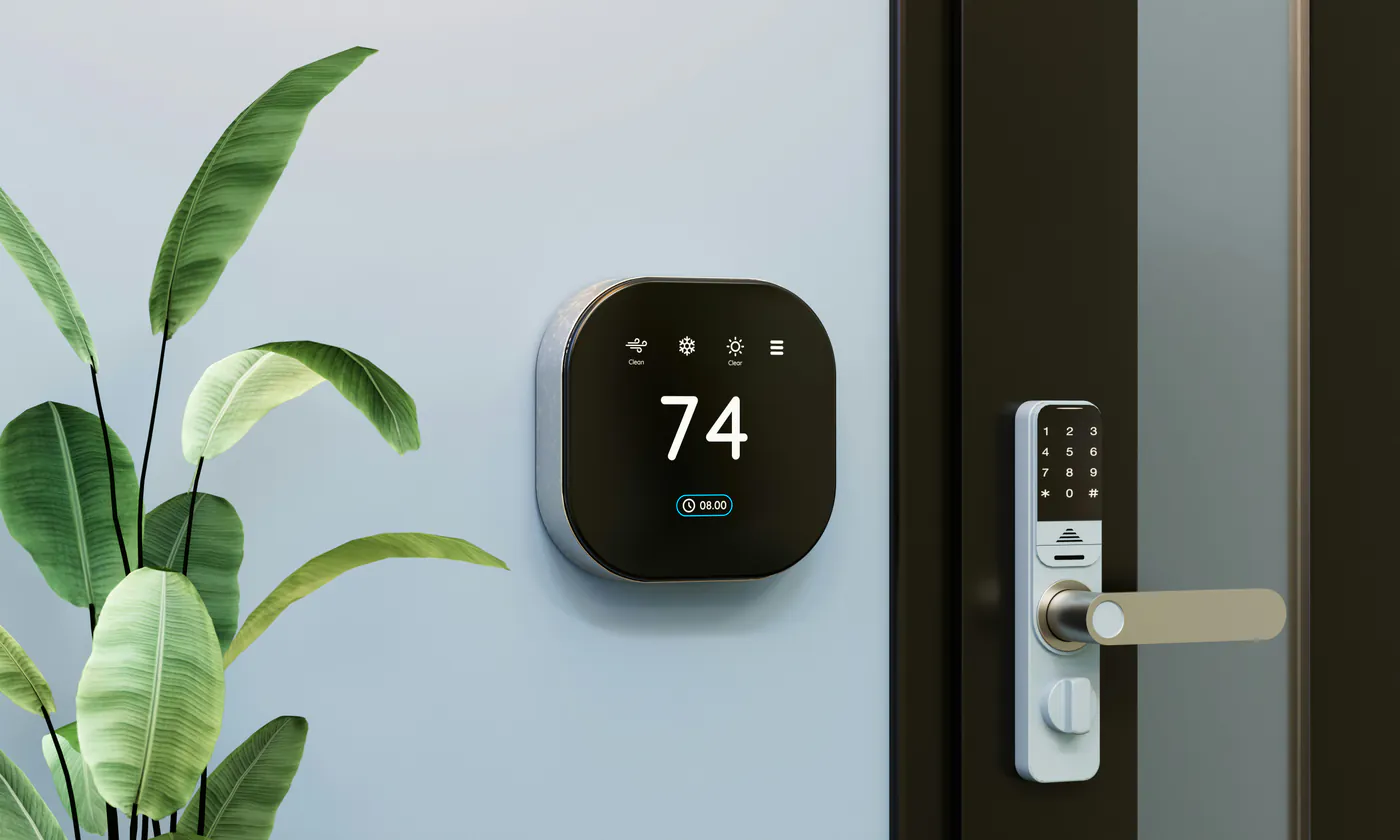
Smart sensors are becoming standard in Québec income properties. Leak detectors, smart thermostats, humidity sensors, connected locks. The goal is not to play tech enthusiast. It is to avoid costly losses and extend the life of the building’s systems.
A leak detected in time in a basement avoids damage that often exceeds $10,000 and prolonged disputes with insurers. A connected lock avoids lock changes between tenants, which can cost a few hundred dollars at each turnover.
These devices connect to central platforms that send alerts to the landlord or manager. For a building with several units, the return on investment is generally achieved in less than two years.
How to choose the right technology tools for your portfolio
No tool is universally superior. The right choice depends on your situation.
A landlord with a single triplex in Montréal does not have the same property management technology needs as an investor who owns fifteen doors in Laval. Before subscribing to anything, ask yourself three concrete questions: how many hours a month do you currently spend on management? Which tasks cost you the most time and energy? What is your monthly budget for tools, keeping in mind that most are deductible?
A good starting point for landlords who want to professionalize their management without doing everything themselves is to delegate to a manager who already has the technology infrastructure in place. The guide to managing a property in Québec in 2026 compares the options in detail.
Conclusion
Property management technology in Québec is no longer an option reserved for large companies. It is accessible, affordable and often profitable from the second or third unit managed. Digital tools allow landlords to save time, better document their interventions, reduce losses tied to late payments and prevent costly losses.
The most common mistake is to stack tools without a strategy, or to try to automate everything at once. A gradual approach, aligned with the size of the portfolio and the time available, almost always produces better results. For landlords who want to benefit from a complete technology infrastructure without having to build it themselves, working with a professional manager remains the most direct route.
Request a free quote for your building
FAQ
Which software should you choose to adopt property management technology in Québec?
To adopt property management technology effectively, there is no universally superior software on today’s Québec market. Hopem and Building Stack are recognized for their compliance with Québec’s tax and legal framework. Buildium and Yardi Breeze offer very advanced features, but require some adjustments. The choice depends on the number of units managed and the monthly budget available.
Is electronically signing a lease legal in Québec?
Yes. The Act to establish a legal framework for information technology recognizes the legal value of an electronic signature for a Québec residential lease. It has the same force as a handwritten signature, provided the parties consent to this method and the signatory’s identity can be verified. Most professional platforms natively build in these essential legal safeguards.
Can artificial intelligence replace a property manager in Québec?
No, not with the technology currently available on the Québec market. AI speeds up certain tasks, such as writing listings, preliminary screening of applications or comparative analysis of rents by area. However, important decisions, representation before the Tribunal administratif du logement and the human relationship with tenants still require experienced, professional human judgment.

Need a quote for your property management?
Get a personalized assessment with no commitment.
Request a quote